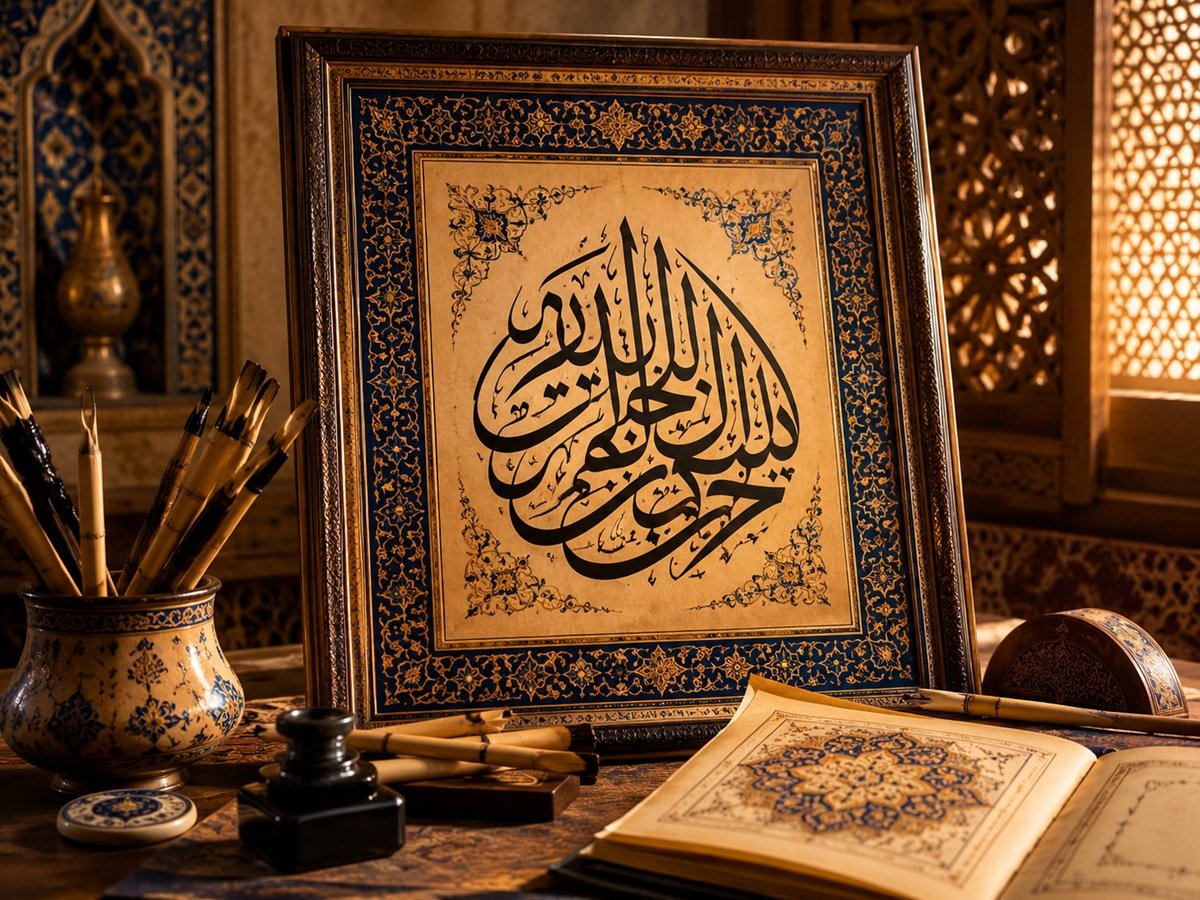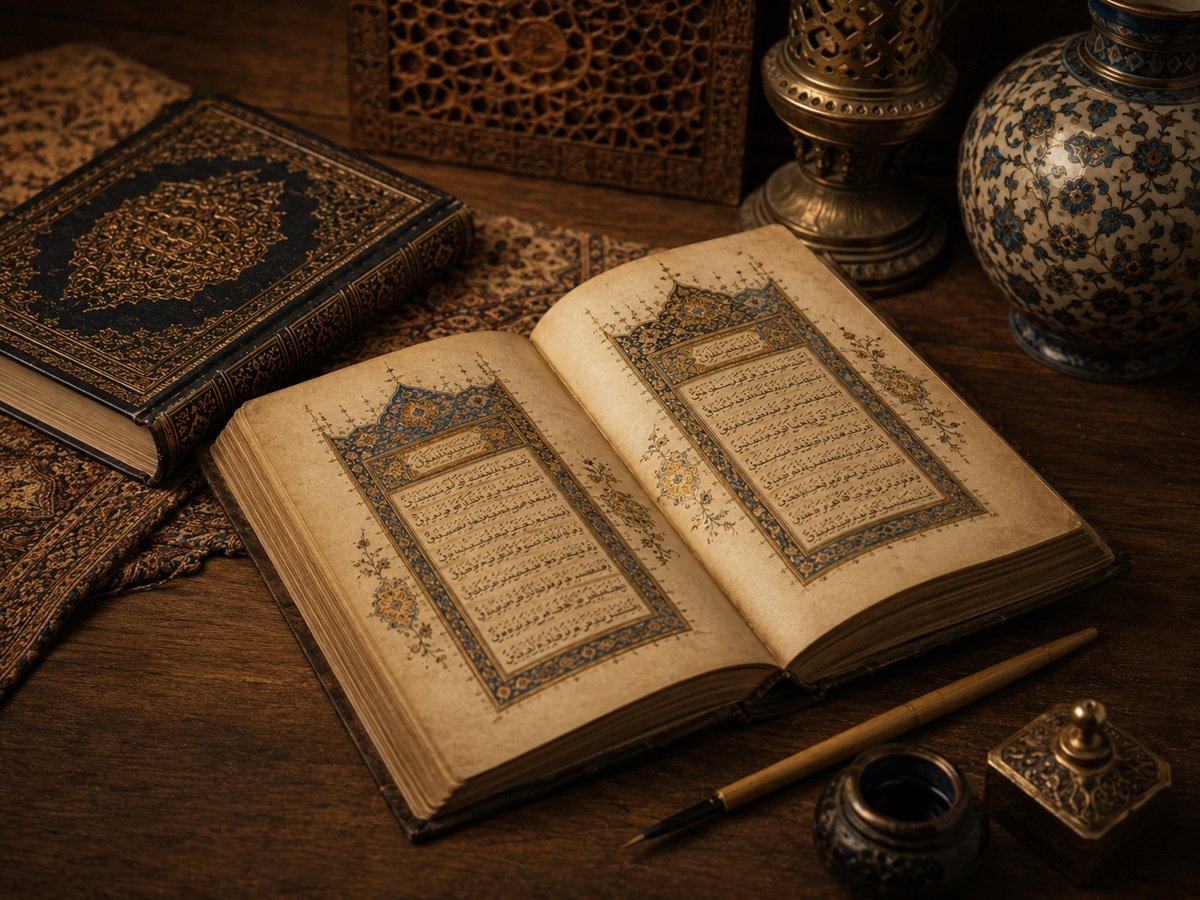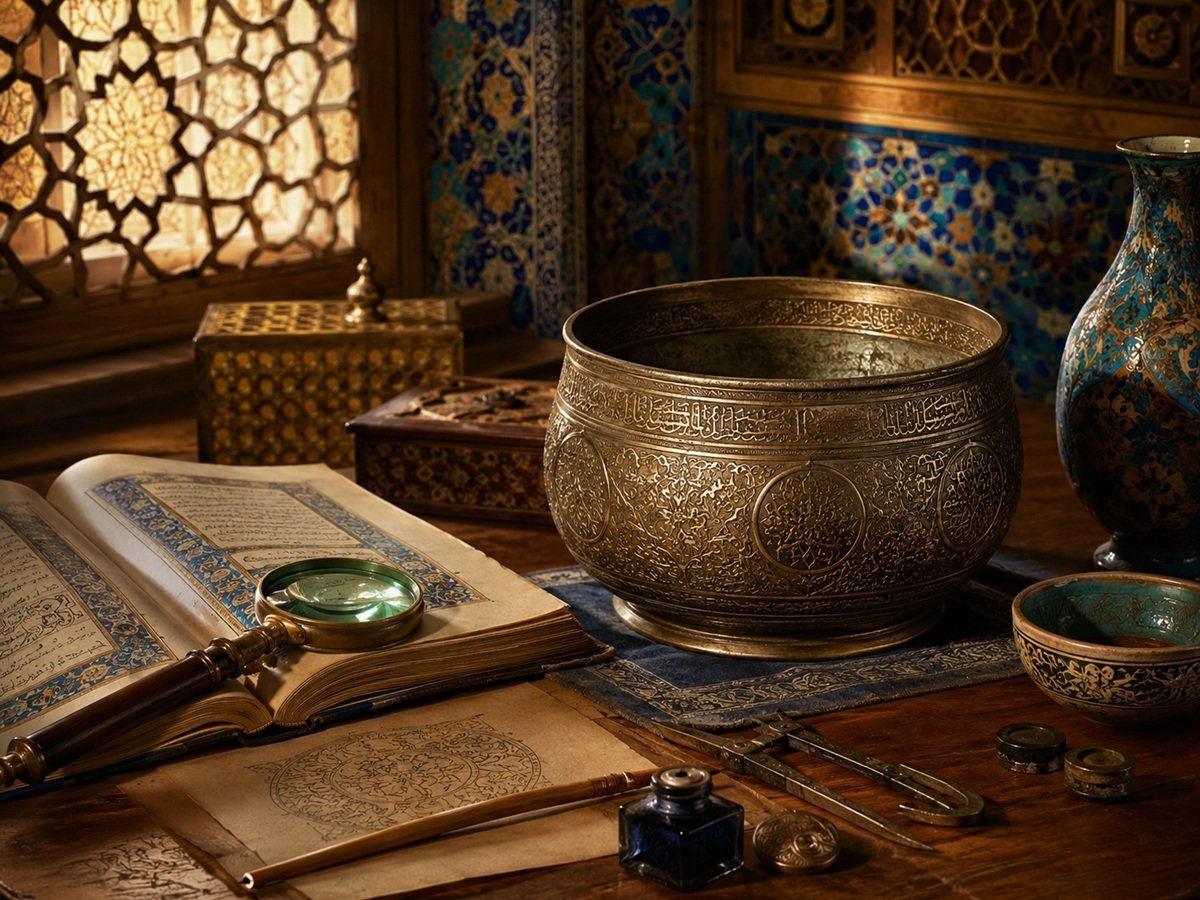
Every historical object carries a story from the past. A manuscript, Qur’anic leaf, calligraphy panel, metal vessel, ceramic tile, seal, coin, or decorative object is not valuable only because it is old. Its significance lies in the signs it preserves: signs of time, place, maker, use, ownership, and movement. To read a historical object is to observe these signs and bring them together in order to understand the object more fully.
The first step is careful observation. What is the object made of? Is it paper, parchment, metal, ceramic, wood, textile, lacquer, or another material? Each material can tell us something about technique, geography, period, and function. In a manuscript, the type of paper, preparation of the surface, and quality of ink may help identify a period or region. In a ceramic object, glaze, color, and design may point to a particular artistic center or regional tradition.
The next layer is script, design, and decoration. In manuscripts and calligraphic works, the type of script is especially important. Naskh, Thuluth, Kufic, Nastaliq, or Shekasteh Nastaliq each carries associations with different periods, regions, and uses. Alongside the script, illumination, ruling, margins, composition, and color all contribute to the visual identity of the work. Sometimes these decorative elements are as important as the main text in understanding the object.
Small details should never be ignored. Seals, ownership notes, marginalia, old inventory numbers, endowment statements, signatures, dates, and corrections can provide valuable information about the life of an object. A simple seal may show that an item once belonged to a particular person or library. A short note in the margin may reveal how the object was read, taught, preserved, or passed from one hand to another.
Historical period and origin are also key to reading an object. Questions such as “When was this made?”, “Which region or cultural sphere does it belong to?”, and “What artistic or intellectual tradition does it reflect?” help us move beyond surface description. An object from the Safavid, Qajar, Ottoman, Timurid, or Mughal world gains meaning within its own historical and cultural context.
The condition of an object is part of its story as well. Wear, stains, tears, repairs, discoloration, rubbing, and signs of use are not always merely defects. Sometimes they show that the object lived a real life: it was read, touched, moved, preserved, and used across time. Of course, distinguishing natural aging from serious damage or later restoration requires care and, in many cases, expert evaluation.
When reading a historical object, it is important to distinguish between observation, interpretation, and certainty. Not everything can be stated with complete confidence. Sometimes an object may be “attributed to” a certain period or region rather than firmly assigned to it. This kind of caution is part of a responsible approach to historical heritage. Words such as “probably,” “attributed to,” “requires further examination,” or “based on available evidence” are often necessary in describing historical works.
Ultimately, reading a historical object means seeing it as a set of layers. Text, material, script, ornament, function, ownership, period, region, condition, and journey through time all work together to create meaning. When these layers are examined with patience and attention, the object is no longer silent. It becomes a living witness to culture, art, and history.