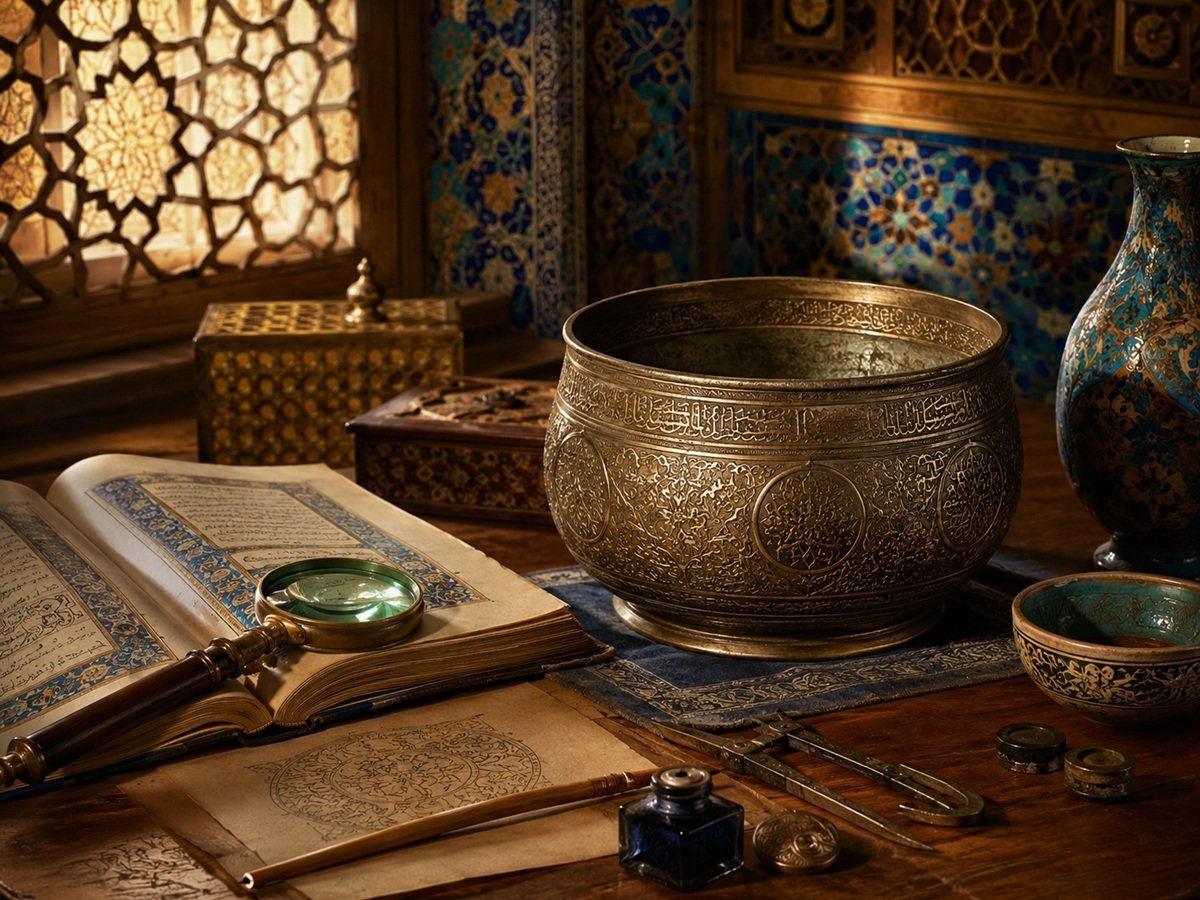
Calligraphy holds a distinctive and deeply respected place in Islamic art. In many artistic traditions, images and figures often serve as the primary means of visual expression. In the Islamic world, however, script and the written word became among the most powerful forms of artistic creation. Letters moved beyond their practical function and became a language of beauty, order, meaning, and spiritual presence.
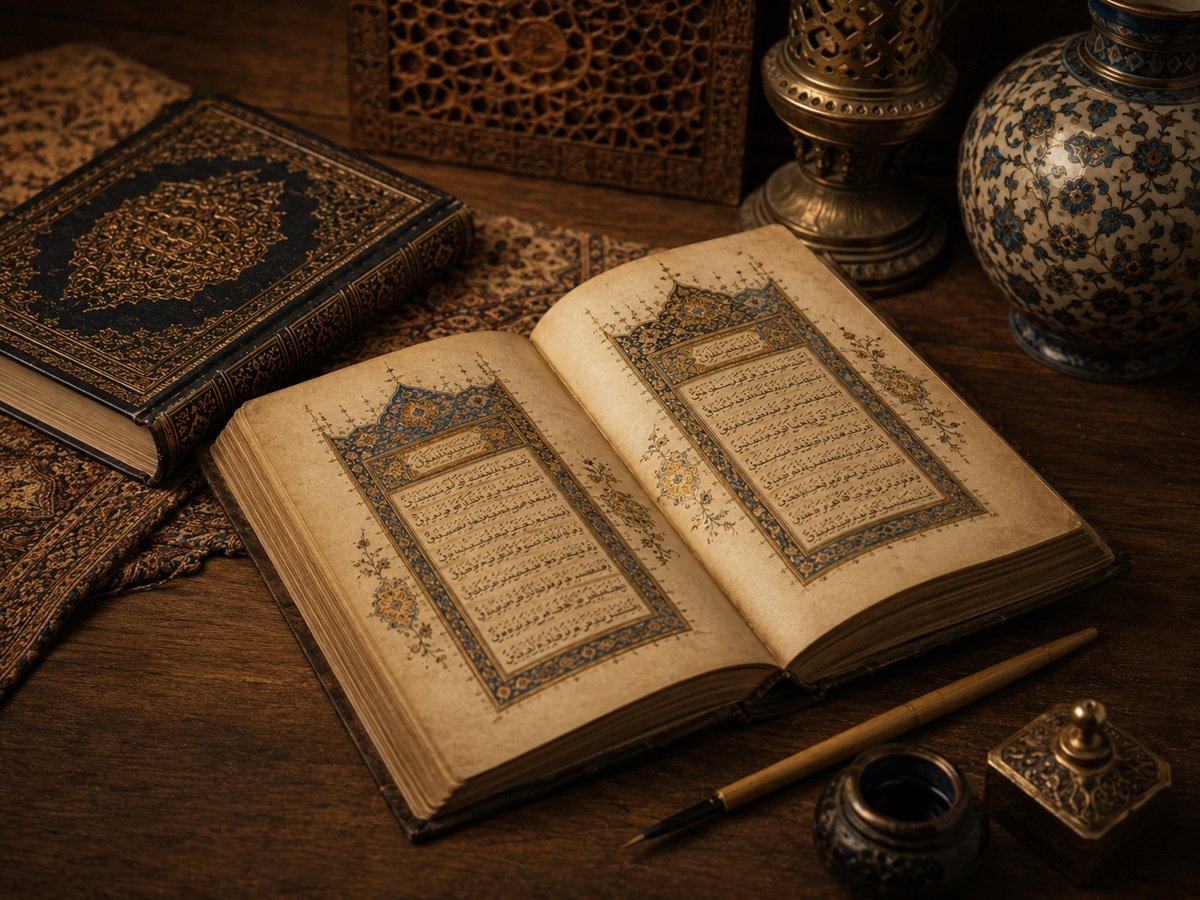
This special status is closely connected to the importance of the word in Islamic culture. The Qur’an, as the central text of Islamic civilization, played a fundamental role in the development of the arts of writing and calligraphy. Writing sacred verses was not merely a technical act. It required care, discipline, concentration, and a sense of reverence. Over time, calligraphy grew beyond the skill of writing and became an independent and highly esteemed art.
In manuscripts, calligraphy is not simply a vehicle for transmitting text. The type of script, spacing, rhythm of letters, proportion of lines, and relationship between text and margin all shape the character of the work. One manuscript may be written in a clear and balanced Naskh script, another in the majestic forms of Thuluth, and another in the fluid and poetic movement of Nastaliq. Each script carries its own visual language and gives the object a distinct atmosphere.
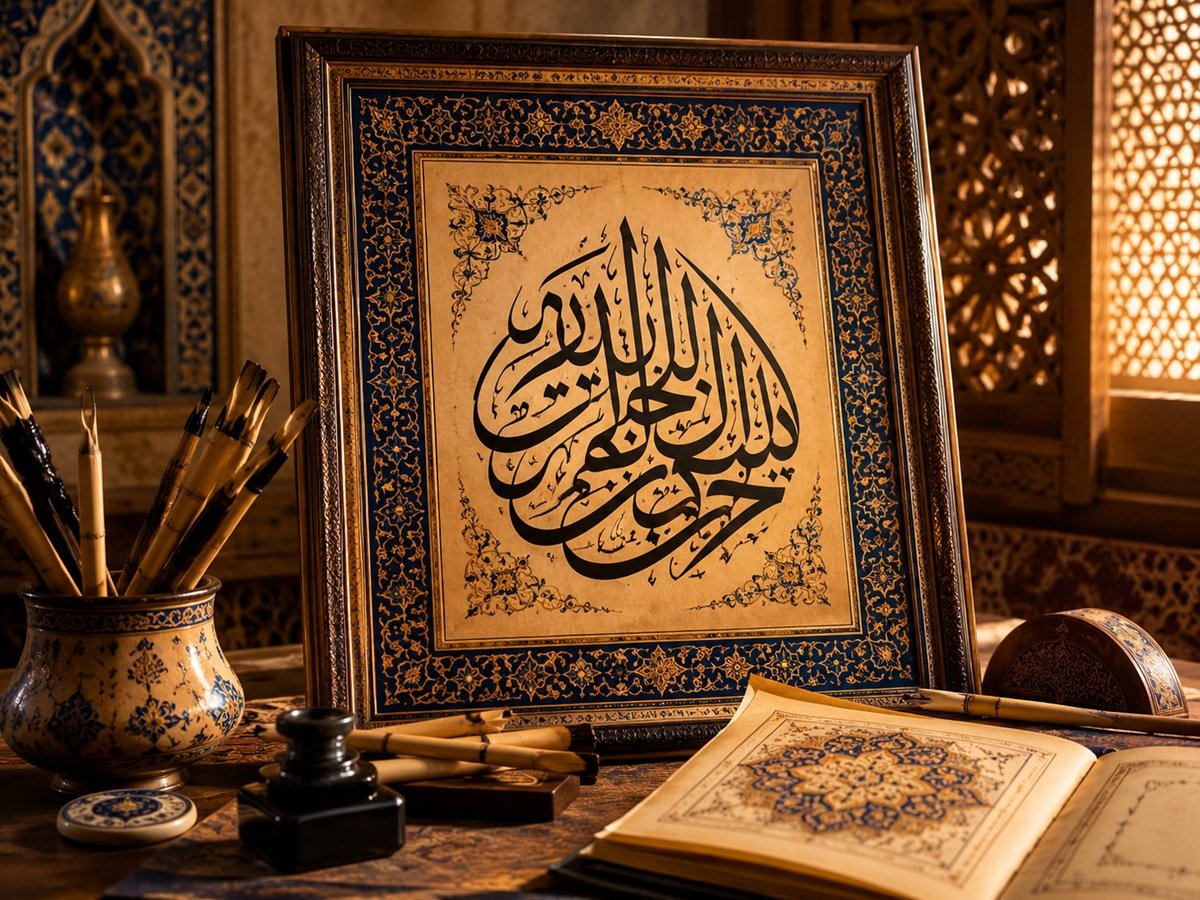
Throughout history, Islamic calligraphy appeared in many forms: Qur’anic manuscripts, scientific and literary texts, calligraphic panels, architectural inscriptions, seals, metalwork, ceramics, textiles, and decorative objects. This wide presence shows that script in Islamic culture was not confined to the page. It moved across walls, prayer niches, vessels, fabrics, and objects, becoming part of the visual environment of daily and devotional life.
Calligraphy also has a close relationship with other Islamic arts. Illumination, page design, ruling, bookbinding, and architecture often worked in harmony with script. On a manuscript page, text and ornament together create a space that is both readable and visible. In architecture, calligraphic inscriptions can transform a building into a visual text, where words become part of space and structure.
One of the defining qualities of Islamic calligraphy is the balance between rule and creativity. Each script has its own principles, proportions, and discipline. Yet within these established forms, the calligrapher can reveal personal skill, taste, and imagination. The beauty of calligraphy does not come from unrestricted freedom, but from mastery, repetition, knowledge of tradition, and the ability to create within a refined visual order.
For this reason, a calligraphic work cannot be understood only through the words it contains. One must also look at the quality of the pen stroke, the movement of the hand, the proportion of letters, the use of empty space, the composition, the paper, the ink, and the relationship between writing and surface. Sometimes the value of a work lies not in the length of its text, but in the delicate execution of a few words or even a single phrase.
Calligraphy in Islamic art exists between reading and seeing. It belongs to language and meaning, but also to form, rhythm, composition, and visual beauty. This graceful dual nature has made it one of the most recognizable expressions of Islamic heritage: an art that turns the word into image, and the image into a bearer of meaning.